
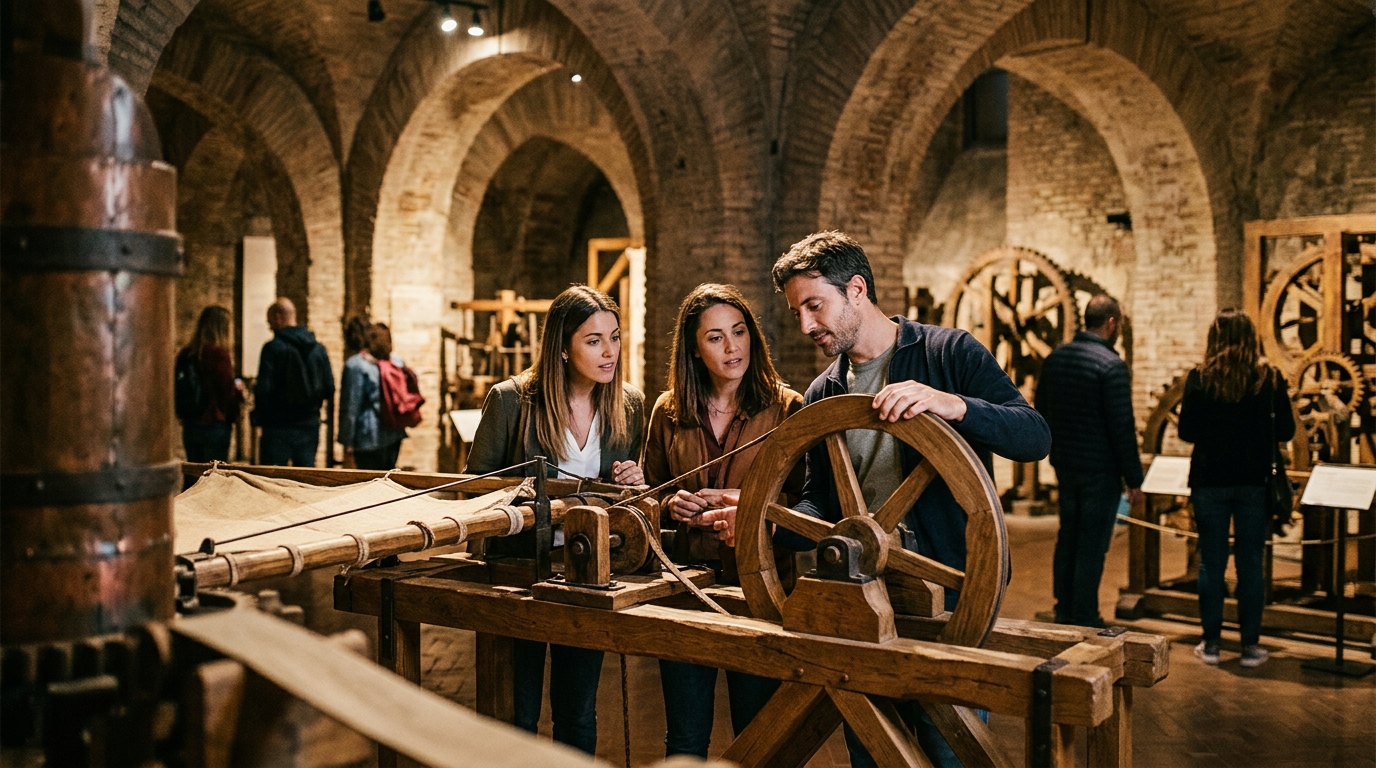
Leonardo da Vinci remains the quintessential symbol of the Renaissance mind, yet his original manuscripts are scattered across global institutions, making it difficult for any single visitor to witness his full scope of genius. According to recent cultural heritage data, fewer than 200 original Leonardo drawings survive worldwide, with the majority housed in major European collections like the Royal Library at Windsor and the Institut de France. This scarcity means that seeing his actual inventions requires strategic travel planning, but it also highlights the immense value of institutions that have reconstructed his visionary machines with scientific precision. (Museo Leonardo da Vinci)
The Underground Vault Experience in Rome
For visitors in Italy, the most accessible and immersive way to engage with Leonardo's mechanical genius is through large-scale, scientifically accurate reconstructions. The Museo Leonardo da Vinci in Piazza del Popolo offers a unique entry point into this world. Located in the underground vaults of the Basilica Santa Maria del Popolo, this museum provides a tangible connection to the inventor's mind through interactive models.
Leonardo was anointed the master artist of Florence at the tender age of 18, responsible for the iconic artworks of the Mona Lisa, The Last Supper and The Vitruvian Man. While you won't see the original artworks at this museum, you will discover his incredible story, groundbreaking inventions, detailed anatomical sketches, startling scientific discoveries and much more that will leave you amazed that one person could create so much in one lifetime. The museum is the most popular dedicated Leonardo museum in Rome - great for all the family to enjoy and a must-see stop on the Rome itinerary.
The museum is located at the end of Via del Corso and only a 5 minute walk from the Spanish Steps. This proximity to major tourist hubs makes it an ideal stop for those asking where can I see Leonardo da Vinci's inventions in person without traveling to remote archives. The interactive nature of the exhibits allows visitors to understand the engineering principles behind his flying machines, war tanks, and hydraulic systems.
Visitors can explore the museum's gallery and learn more about the historical context of these inventions. For those planning their itinerary, detailed information regarding hours and ticketing is available on the Info page. To ensure entry to this popular venue, it is highly recommended to Book Now in advance, especially during the peak tourist season in Rome.
Milan: The Heart of His Later Years
Milan holds a special place in Leonardo's biography, as he spent the final years of his life there under the patronage of Ludovico Sforza. The Castello Sforzesco in Milan houses a significant collection of Leonardo's manuscripts and instruments. This castle served as his residence and workshop until his death in 1519, making it a site of profound historical significance.
The Castello Sforzesco contains the Codex Trivulzianus and other documents that detail his work on the Sforza family's projects. Researchers and enthusiasts can study his architectural designs and military engineering plans in this setting. The museum's collection provides insight into how Leonardo transitioned from artist to engineer and back again.
For more information on the castle's exhibitions and current displays, visitors should consult the official Milano Castello website. The institution frequently updates its content to reflect new research on Leonardo's time in Milan. Academic studies on this period are often published in journals such as the Renaissance Quarterly, which provides peer-reviewed analysis of his Milanese period.
Paris: The Codex Royal Collection
Paris is home to the Codex Royal, a collection of Leonardo's notebooks that were acquired by King Francis I of France. These manuscripts contain some of his most detailed studies on anatomy, flight, and hydraulics. The Bibliothèque nationale de France (BnF) in Paris is the primary repository for these documents.
The Codex Royal is not always on public display due to the fragility of the paper. However, the BnF regularly rotates exhibits featuring Leonardo's work. Visitors can view high-quality facsimiles and occasionally the original manuscripts during special exhibitions. The library's digital archive also provides online access to many of these pages for remote study.
For those interested in the digital preservation of Leonardo's work, the Gallica digital library offers free access to scanned manuscripts. Academic research on the Codex Royal is often cited in works such as Leonardo da Vinci: The Masterpiece Collection published by Cambridge University Press.
Windsor Castle: The Royal Archives
The Royal Collection at Windsor Castle in the United Kingdom holds the largest number of Leonardo's original drawings. This collection includes the Codex Forster and the Codex Arundel, among others. These manuscripts are considered some of the most important documents in the history of science and art.
The drawings at Windsor cover a wide range of topics, from the flight of birds to the flow of water. They demonstrate Leonardo's methodical approach to observation and his ability to translate complex natural phenomena into clear visual diagrams. The Royal Collection Trust manages these artifacts with strict conservation protocols.
Visitors to Windsor Castle can view selected drawings in the King's Library. For detailed information on viewing schedules and conservation efforts, the Royal Collection Trust website is the authoritative source. Scholarly analysis of these drawings is often found in publications like Britannica's entry on Leonardo da Vinci.
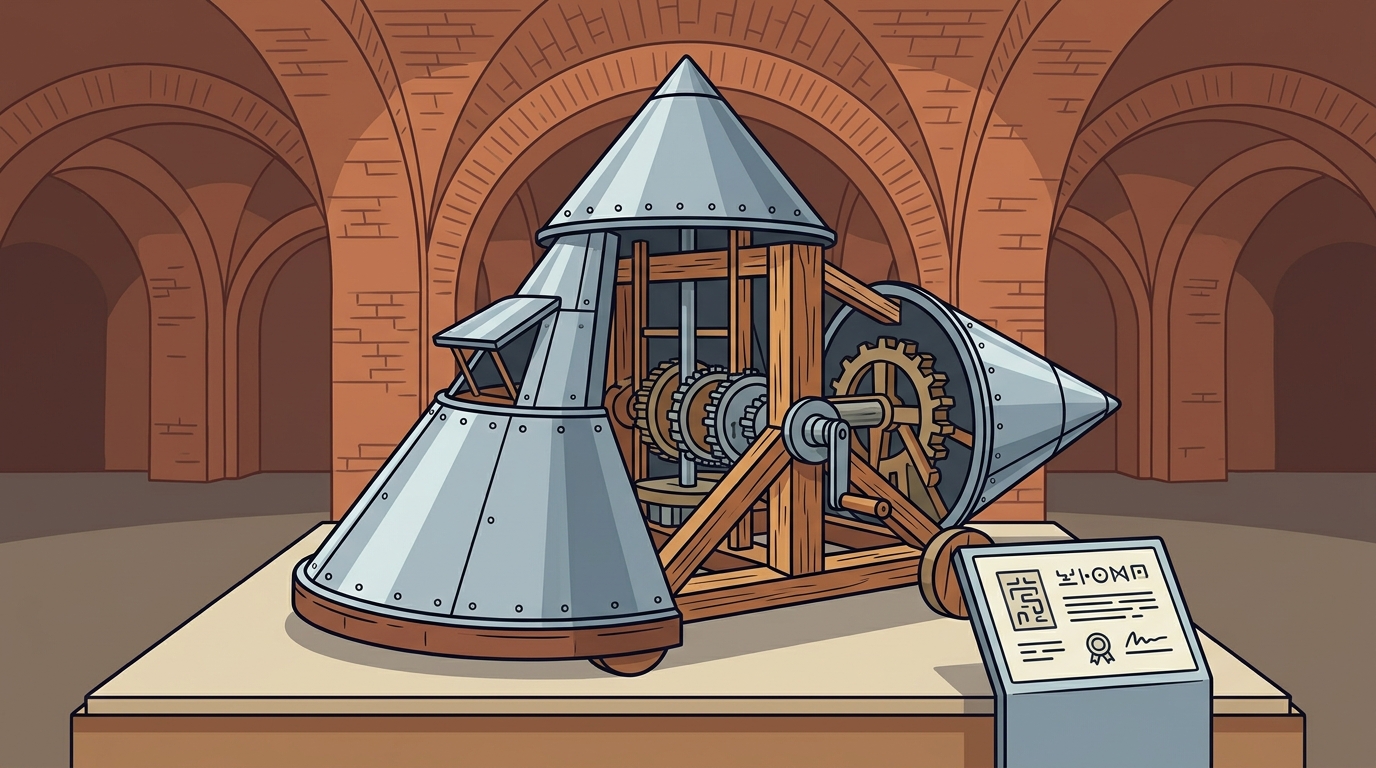
Comparing Leonardo Exhibition Venues
Choosing the right venue depends on your location and specific interests. Below is a comparison of the primary options for seeing Leonardo's work.
| Venue | Primary Focus | Accessibility | Best For |
|---|---|---|---|
| Museo Leonardo da Vinci (Rome) | Interactive Reconstructions | High (Central Location) | Families and General Visitors |
| Castello Sforzesco (Milan) | Historical Manuscripts | Medium (Museum Hours) | History Enthusiasts |
| BnF (Paris) | Codex Royal | Low (Special Exhibitions) | Researchers and Scholars |
| Windsor Castle (UK) | Original Drawings | Medium (Tourist Access) | Art and Science Historians |
Key Takeaways
- The Museo Leonardo da Vinci in Rome offers the most accessible interactive experience with scientifically accurate machine reconstructions.
- Leonardo was anointed the master artist of Florence at the tender age of 18, which contextualizes his early mastery of engineering principles.
- Milan's Castello Sforzesco houses manuscripts from his final years, providing insight into his later theoretical work.
- Paris and Windsor hold the largest collections of original manuscripts, but access is often restricted to special exhibitions or scholarly appointments.
- The museum in Rome is located at the end of Via del Corso and only a 5 minute walk from the Spanish Steps, making it a convenient stop.
- Interactive exhibits in Rome allow visitors to understand the mechanics of his flying machines and hydraulic systems firsthand.
- Online resources like Gallica and the Royal Collection Trust provide digital access to manuscripts for remote study.
Frequently Asked Questions
Can I see the original Mona Lisa at the Museo Leonardo da Vinci?
No, the original Mona Lisa is housed in the Louvre Museum in Paris. The Museo Leonardo da Vinci in Rome focuses on his inventions, anatomical studies, and scientific discoveries through interactive models and manuscripts.
Is the Museo Leonardo da Vinci in Rome suitable for children?
Yes, the museum is designed to be engaging for all ages. The interactive nature of the exhibits allows children to see how Leonardo's machines worked, making complex engineering concepts accessible and fun.
How far is the museum from the Spanish Steps?
The museum is located at the end of Via del Corso and only a 5 minute walk from the Spanish Steps. This makes it easily accessible for tourists staying in the historic center of Rome.
Where are the majority of Leonardo's original drawings kept?
The majority of Leonardo's original drawings are kept in the Royal Collection at Windsor Castle in the UK and the Bibliothèque nationale de France in Paris. These institutions hold the Codex Forster, Codex Arundel, and Codex Royal.
Do I need to book tickets in advance for the Rome museum?
It is highly recommended to book tickets in advance, especially during peak tourist seasons. You can Book Now on the official website to secure your entry time.
What is the significance of the underground vaults in Rome?
The museum is located in the underground vaults of the Basilica Santa Maria del Popolo, a major papal basilica second only in importance to St Peter's and one of the seven pilgrim churches in Rome. This unique setting provides a historical and spiritual context for Leonardo's work.
Are there digital resources available for studying Leonardo's inventions?
Yes, institutions like the BnF and the Royal Collection Trust offer digital archives. The Gallica digital library provides free access to scanned manuscripts for online study.
Plan Your Visit
Discover the greatest genius of all time in the heart of Rome. The Museo Leonardo da Vinci in Piazza del Popolo offers a unique opportunity to engage with his inventions in a tangible way. Don't miss your chance to be inspired by the man who bridged the gap between art and science.
For more information on the museum's exhibits and history, visit the About page. To ensure a smooth visit, please Book Now for your tickets. You can also contact the museum directly at info@museodavinci.it or call +39 06 3200144 for any specific inquiries.